
The Truth About Write-Offs: What’s Really Deductible

By Gretchen Roberts
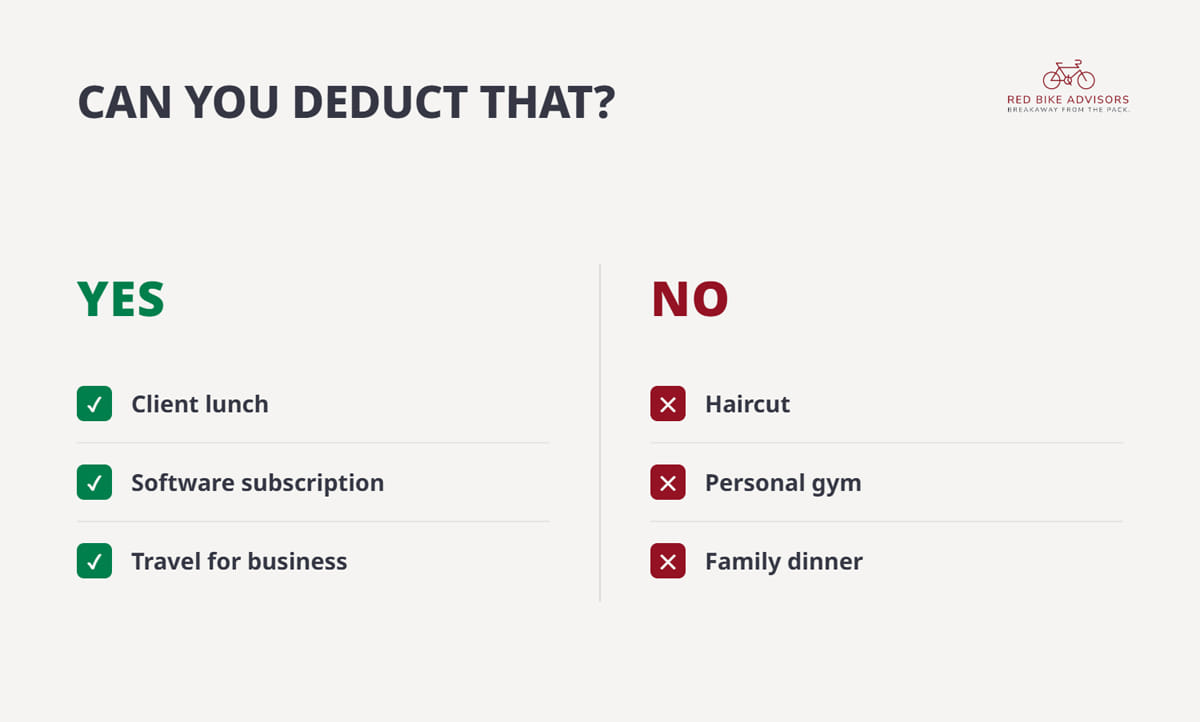
If you’ve ever asked yourself, “Can I write this off?” — you’re not alone. It’s the #1 tax question business owners wrestle with.
Here's the problem: social media advice (what we jokingly call "TikTok Tax"), friendly "tips" from well-meaning people, and guesswork all lead to costly mistakes. Either you leave money on the table, or you risk IRS trouble.
Here's the truth: the IRS doesn't care what your cousin or a tax influencer told you. It cares about three tests.
- Is It a Real Business?
You need an actual business with the primary goal of making a profit, not just a hobby that occasionally makes money.
- Have You Officially Started?
You need to actually be up and running, not just planning to be. Expenses you rack up before your business is genuinely open for business get treated differently than the ones you incur once you're operating, so timing matters as much as the expense itself.
- Is the Expense "Ordinary and Necessary"?
Ordinary means common in your industry. Necessary means helpful to running your business.
Yes, that means client lunches may qualify with proper documentation. No, it doesn't mean you can write off haircuts or gym memberships because they "help your brand."
The Cost of Confusion
If you don't know the rules, you may overpay tax every year. Or worse, you may underpay and invite an audit.
Neither one helps you build a profitable, sustainable business.
Cheat Sheet for Proper Tax Documentation
- Keep receipts and notes. Write down the who, what, and why for meals, travel, and client-related expenses.
- Stay organized. Clean books mean you never scramble at tax time.
- Ask before you assume. A quick check-in with a proactive advisor saves thousands, and a lot of stress.
- Some deductions and credits require extra paperwork. For example, taking the FMLA credit requires very specific items to be on your policy ahead of the FMLA leave being taken.
- Some deductions and credits aren't worth it. We advocate for taking every legal deduction available to you, but some require a lot of documentation, setup work, or upfront investment, and it may not be worth it for you. I like to frame it this way: will this deduction save you enough to make up for the time you'll spend documenting it? The answer varies by business owner, but it's worth asking. Your time may be better spent driving revenue than logging your child's work hours, for example.
The Bottom Line
Every dollar in legal deductions is profit that stays in your pocket. Don't guess your way through it, know the rules, and set yourself up to win.
Want to make sure you're taking advantage of every deduction legally available to you?
Gretchen Roberts
Gretchen Roberts is CEO of Red Bike Advisors LLC. As a business owner herself, Gretchen has a deep understanding of the problems, questions, and financial pain points that business owners experience on a daily basis, and how strategic financial and tax planning is the key to "breakaway" business growth and success.