
How Do You Know When A Healthcare Practice Is Ready For A Proactive Advisory Relationship?

By Gretchen Roberts
Most healthcare practice owners know something is missing from their accounting relationship before they can name it. They are busy, profitable on paper, and vaguely aware that their financial picture should be clearer than it is. The move from a compliance-only accounting relationship to a proactive advisory partnership is not right for every practice at every stage. Here are the five signs that your practice is ready for that shift and what it actually means to make it.
Sign 1: You find out your tax number in March or April, not October
If your accountant's primary form of communication is a request for documents in late winter followed by a tax return, you are in a reactive relationship. A proactive advisory relationship includes a mid-year tax projection, typically in July, and an October strategy session where the year-end planning moves are identified and executed before December 31.
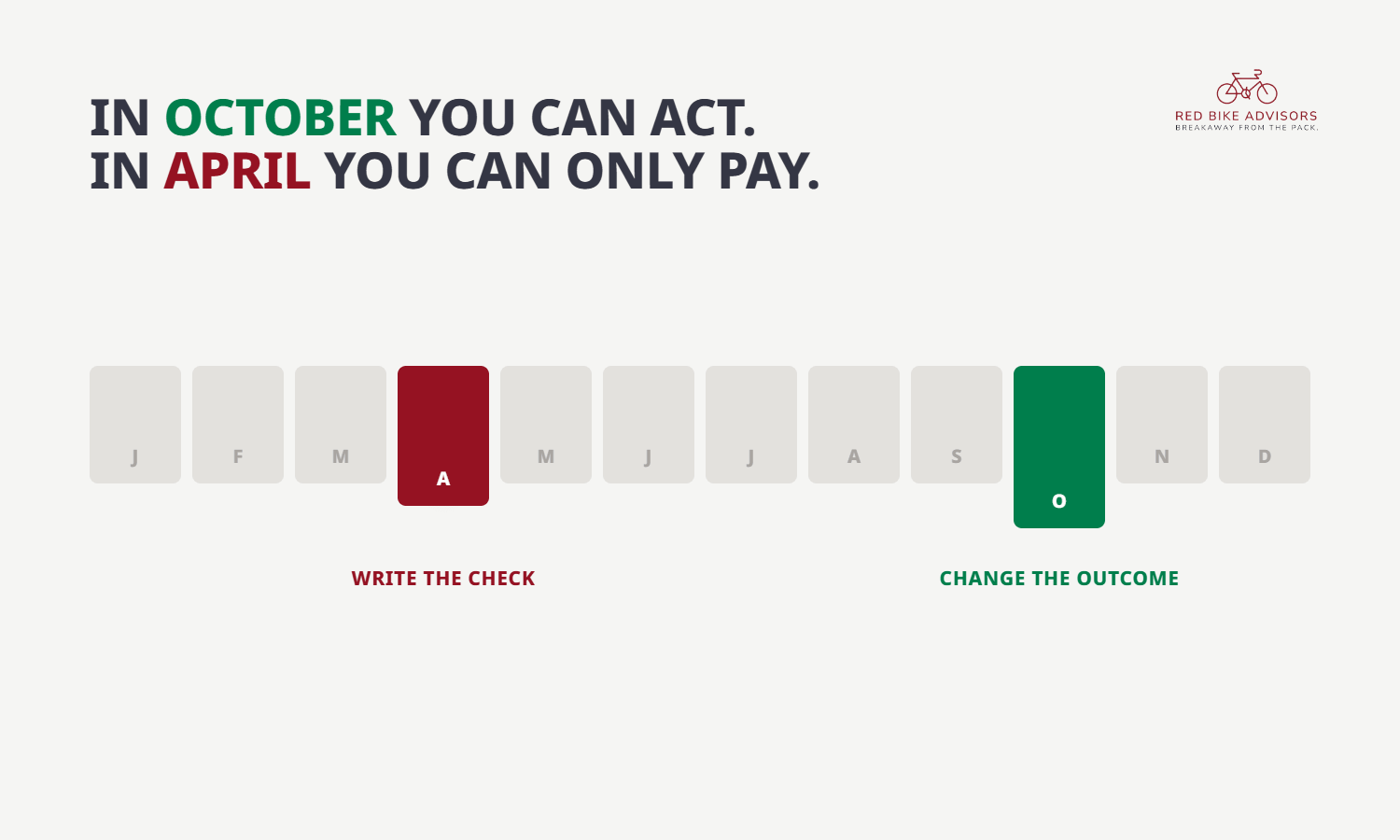
The difference is not just organizational. It is financial. Practice owners who know their projected tax number by October can make decisions: fund a retirement plan, time an equipment purchase, review their compensation structure. Practice owners who find out in March can only write the check.
Sign 2: You are generating real revenue but not building real wealth
This is the pattern that shows up most often in practices between $1M and $5M in revenue. The practice is growing. Overhead is manageable. The owner is taking home a reasonable income. But the personal balance sheet is not moving. There is no meaningful retirement account being funded. There is no structured plan for how the practice converts to personal wealth over time.
A proactive advisory relationship addresses this directly. Tax-efficient retirement funding, owner compensation structure, and the long arc from practice income to personal financial independence are all part of the conversation. A compliance-only accountant rarely has that conversation.
Sign 3: You are making financial decisions without complete information
Should you hire the associate doctor you have been considering? Can the practice afford the new equipment? Is it the right time to add a second location?
These are decisions that require a clear picture of current cash flow, projected income, and the financial capacity of the practice. If you are making these decisions without that information, or making them based on a bank balance rather than a financial model, you are flying without instruments.
A proactive advisory relationship provides the data layer that makes these decisions navigable. Not just whether you can afford it this month, but what the financial impact looks like over 12 to 36 months.
Sign 4: Your practice is profitable, but you still feel financially stressed
Profitability on paper and financial peace of mind are two different things. A practice owner who is profitable but has no cash reserve, no tax savings account, no forward visibility on the next 60 to 90 days of cash flow is in a structurally stressful position even if the P&L looks fine.
Proactive financial management builds the structures that convert profitability into actual stability: a 3 to 6 month cash reserve, a disciplined tax savings protocol, a quarterly financial review that catches problems before they become crises.
Sign 5: You are successful enough that the stakes of a mistake are real
This is the sign that often goes unstated. When a practice is small and still figuring things out, financial mistakes are bounded. When a practice is generating $1.5M to $3M in revenue, has employees who depend on it, and represents the owner's largest financial asset, the stakes of poor financial planning are real.
A misstructured entity costs tens of thousands in excess payroll taxes per year. A retirement plan that was never established costs that same amount in missed tax-advantaged savings. An owner compensation structure that has not been reviewed in five years may be paying more to the IRS than it should.
These are not catastrophic failures. They are quiet, compounding mistakes that are entirely preventable with the right financial partner in the room.
What does a proactive advisory relationship actually look like in practice?
It looks like quarterly financial reviews with your advisory team. A mid-year tax projection delivered to you before September. An October planning session where the year-end moves are decided, not described after the fact. Monthly reporting that includes your KPIs alongside your P&L. A year where April is a confirmation, not a surprise.
If three or more of these signs describe your practice, a free strategy session is the right next step: https://redbikeadvisors.com/book-a-free-strategy-session/
Gretchen Roberts
Gretchen Roberts is CEO of Red Bike Advisors LLC. As a business owner herself, Gretchen has a deep understanding of the problems, questions, and financial pain points that business owners experience on a daily basis, and how strategic financial and tax planning is the key to "breakaway" business growth and success.