
What Are the Financial Benchmarks for a Veterinary Practice?

By Gretchen Roberts
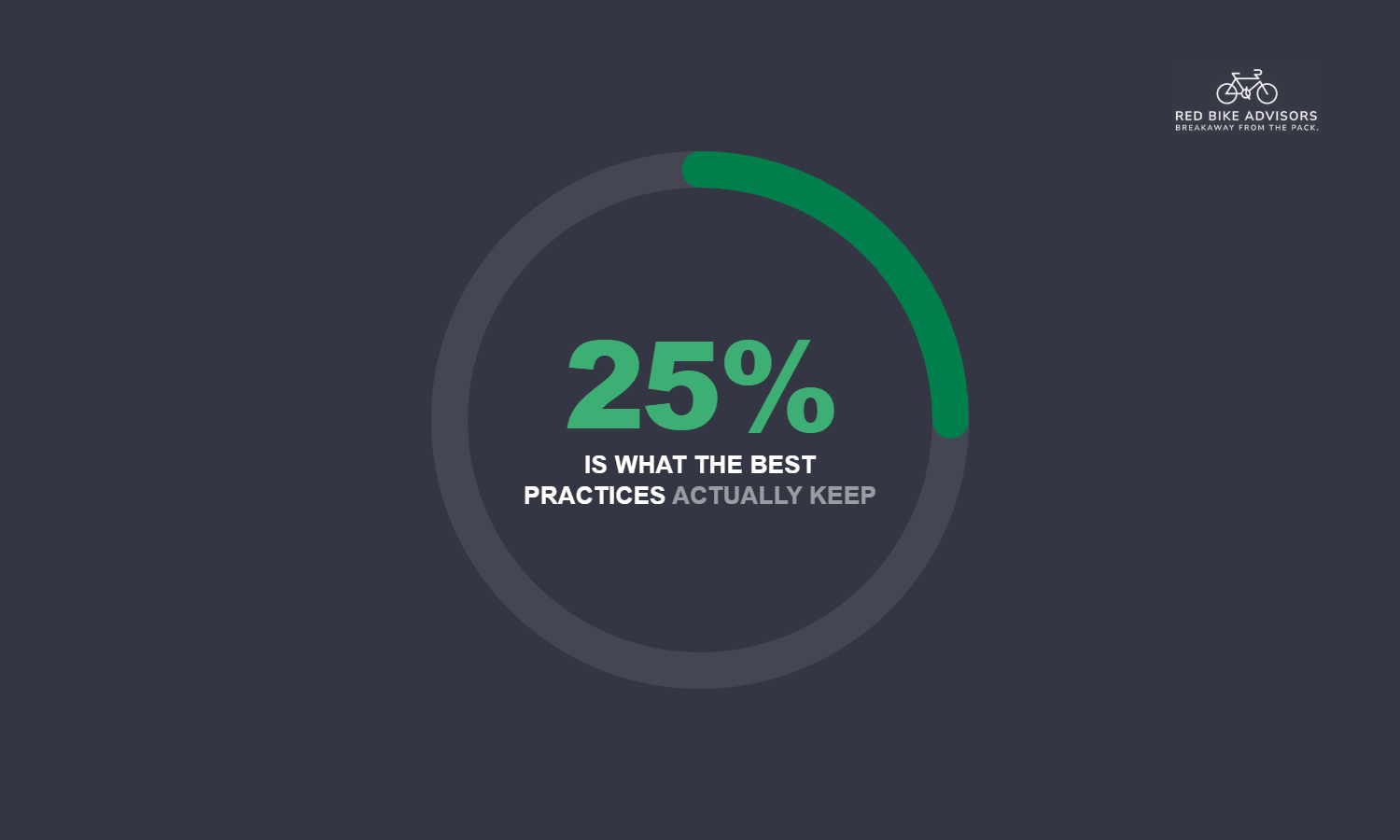
A healthy veterinary practice typically runs a net profit margin between 10 and 25 percent, depending on specialty, with top performers reaching 25 to 30 percent. Drug and supply costs, associate doctor compensation, and staff wages are the three categories that most commonly push practices outside these ranges.
If your practice is profitable on paper, but cash feels tight every month, these numbers are exactly where to look first.
What Are The Key Benchmarks for Veterinary Practices With $1M to $5M in Revenue?
| KPI | Healthy Range | Top Performers |
|---|---|---|
| Net Profit Margin | 12–25% | 25–30% |
| EBITDA Margin | 18–25% | 25%+ |
| Drug & Supply Cost | 22–26% of revenue | Below 22% |
| Associate Doctor Comp | 22–27% of assoc. revenue | Hybrid comp structure |
| Staff Wages & Benefits | 22–28% of revenue | Below 25% |
| Cash Runway | 3–6 months opex | 6+ months |
These numbers are not aspirational. They are what the top-performing practices in your revenue range are actually doing.
What is a Good Net Profit Margin for a Veterinary Practice?
Net profit margin is what is left after you have paid everyone and everything, including drugs, staff, rent, and equipment, but before your own owner compensation.
A healthy range is 15 to 25 percent. Top performers land at 25 to 30 percent.
What does that mean in dollars? A practice doing $2 million in revenue at 15 percent net profit keeps $300,000. The same practice at 25 percent keeps $500,000. That is a $200,000 swing, not from seeing more patients, but from managing margins more intentionally.
Most owners I talk to know their revenue. They do not have a clear picture of what they are actually keeping. That is usually where the problem starts.
What Is a Good EBITDA Margin for a Veterinary Practice?
EBITDA is the clearest measure of how much cash your practice generates before debt and taxes get involved. It is the number lenders use to approve financing and the number buyers use to calculate what your practice is worth.
Healthy range: 18 to 25 percent. Top performers: 25 percent and above.
A practice with a 22% EBITDA margin on $3 million in revenue has an EBITDA of $660,000.
At a six-times multiple, that is a $3.96 million valuation. The same practice at 18 percent values at $3.24 million.
That $720,000 difference in practice value is created entirely by margin management, not revenue growth
What Should Drug and Supply Costs Be for a Veterinary Practice?
Drug and supply costs should run between 22 and 26 percent of revenue. Top performers get this below 22 percent.
At $2 million in revenue, the difference between 26 percent and 22 percent is $80,000 innet profit annually. That is not a revenue problem. That is an inventory problem.
The practices I see running above benchmark almost always share the same root causes: vendor contracts that have not been reviewed in years, a markup structure set when the practice was smaller, or over-ordering without tracking waste. The fix usually starts with a cost-of-goods audit and a conversation with your distributor.
What Does It Mean When Multiple Benchmarks Are Off at the Same Time?
One benchmark below range is a flag. Two or three is a pattern.
I was talking with a practice owner recently whose revenue had grown 18 percent but net profit had barely moved. When we pulled the numbers, drug costs were at 27 percent, staff wages had climbed to 29 percent, and cash runway was under two months.
None of those numbers were catastrophic on their own. Together, they explained exactly why a growing practice felt financially squeezed.
We were not there to solve a revenue problem. We were there to solve a margin problem.
And margin problems have very specific, very fixable causes.
If you want to see exactly where your practice stands against these benchmarks, take the Veterinary Practice KPI Assessment. It walks through each of these categories, scores your practice against industry benchmarks, and shows you where the biggest opportunities are.
https://redbikeadvisors.com/resources/veterinary-practice-assessment
Gretchen Roberts
Gretchen Roberts is CEO of Red Bike Advisors LLC. As a business owner herself, Gretchen has a deep understanding of the problems, questions, and financial pain points that business owners experience on a daily basis, and how strategic financial and tax planning is the key to "breakaway" business growth and success.