
What Are The KPIs That Predict A Thriving Chiropractic Practice?

By Gretchen Roberts
A thriving chiropractic practice is not just one that is busy. It is one that generates strong net profit, keeps overhead in check, collects what it produces, and creates financial leverage for the owner over time. The KPIs that predict this outcome are not just revenue and patient count. They are the specific ratios and metrics that reveal whether growth is translating into wealth or just more work. Here are the benchmarks every chiropractic practice owner should track, ranked by how much they actually move the profitability needle.
1. Net Profit Margin
Benchmark: 30% to 45% of collections for a solo practice; 20% to 35% for multi-doctor practices (after market-rate owner compensation)
Net profit margin is the most direct measure of practice financial health. It tells you what percentage of every dollar collected you are actually keeping after all expenses and a fair market salary for your clinical work.
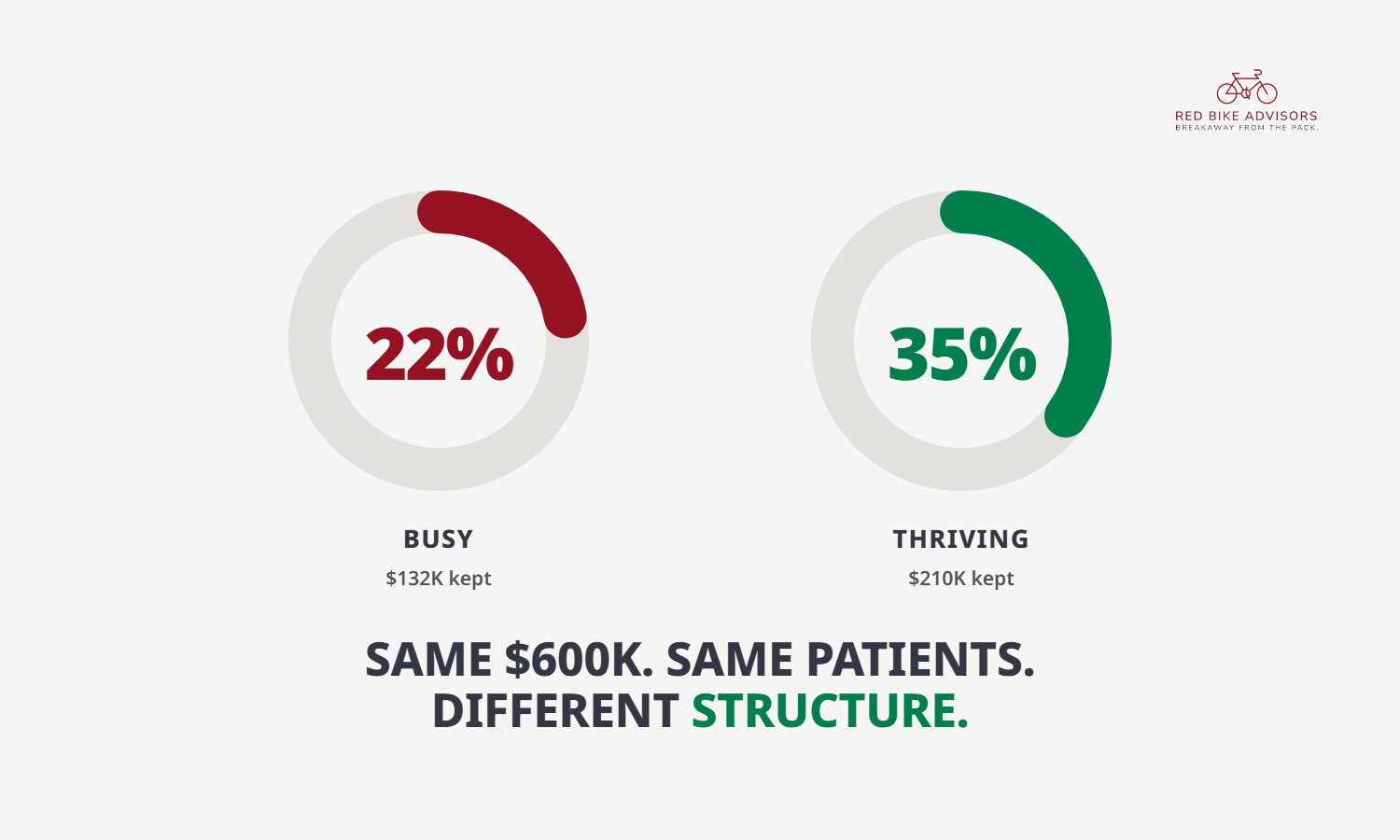
A solo chiropractic practice doing $600,000 in collections at 35% net margin keeps $210,000. The same practice at 22% net margin keeps $132,000. Same revenue. Same patients. Different financial structure. The gap is almost always in staff costs, overhead, or a compensation structure that has never been reviewed.
2. Revenue per Patient Visit
Benchmark: $55 to $90 per visit for most general chiropractic practices; higher for specialized, cash-based, or multi-modality practices
Revenue per visit is the clearest signal of your fee structure and payer mix health. A practice collecting $48 per visit is either underpriced, carrying a heavy Medicare or Medicaid load, or dealing with a collections process that is not capturing everything it earns.
For cash-based practices, revenue per visit benchmarks run higher, often $90 to $150 or more depending on services offered. If your practice has shifted toward more cash-based services over time but revenue per visit has not moved proportionally, the pricing structure may not have kept up with the model change.
3. Collections Rate
Benchmark: 95% to 98% of adjusted production for insurance-based practices; 98% or higher for cash-based
Every point below 95% in your collections rate is money that was earned but not collected. For a $500,000 practice, the difference between a 92% and a 97% collection rate is $25,000 in annual revenue. That number does not require a new patient. It requires a tighter billing process.
Common causes of collection rate gaps in chiropractic: patient balances that age past 30 days without follow-up, insurance denials that go unworked, and verification errors at the front desk that create claim delays.
4. Staff Cost as a Percentage of Revenue
Benchmark: 20% to 30% of revenue for total staff compensation including front desk, billing, and any chiropractic assistants
Staff cost is the most controllable major expense in a chiropractic practice. The most common overspend pattern: the practice adds front desk staff as it grows without evaluating whether the staffing structure still fits the revenue model. A solo practice at $600,000 with three administrative staff members is likely over-staffed relative to patient volume.
Target: $150,000 to $200,000 in revenue per employee as a floor. Practices above $200,000 per employee have built meaningful leverage into their staffing structure.
5. New Patient Acquisition Cost
Benchmark: $75 to $200 per new patient depending on marketing channel and local market
New patient acquisition cost measures how much you spend in marketing to generate each new patient. A practice spending $5,000 per month on marketing and generating 40 new patients has a $125 acquisition cost. A practice spending $3,000 and generating 12 new patients has a $250 acquisition cost.
The benchmark only tells half the story. What matters is acquisition cost relative to patient lifetime value. A new patient who comes 24 times over three years and refers two family members is worth dramatically more than one who comes four times. Practices that track lifetime value alongside acquisition cost make better marketing investment decisions.
6. Cash Reserve (Months of Operating Expenses)
Benchmark: 3 to 6 months of operating expenses in a liquid, interest-bearing account
Cash reserve is the financial metric most chiropractic practice owners undervalue until they need it. A practice with 5 months of operating expenses in reserve can weather a slow referral month, an equipment failure, or an unexpected staffing change without making decisions from scarcity.
A practice with two weeks of reserves makes every decision under pressure. That pressure affects hiring, equipment investment, marketing, and compensation. Building toward 3 months of reserves is one of the highest-return financial disciplines a practice owner can develop.
Which of these KPIs should a chiropractic practice prioritize first?
Start with the one furthest from benchmark and with the most direct path to improvement. For most practices, that is either net profit margin (if it is below 28%) or collections rate (if it is below 95%). Both are high-leverage because improvement flows directly to the bottom line without requiring new patients or new revenue.
Take the Chiropractic KPI Benchmark Guide to see where your practice stands on all six of these metrics https://redbikeadvisors.com/resources/chiropractic-practice-assessment
Gretchen Roberts
Gretchen Roberts is CEO of Red Bike Advisors LLC. As a business owner herself, Gretchen has a deep understanding of the problems, questions, and financial pain points that business owners experience on a daily basis, and how strategic financial and tax planning is the key to "breakaway" business growth and success.