
What is a Tax Savings Blueprint for a Dental Practice and What Does it Produce?

By Gretchen Roberts
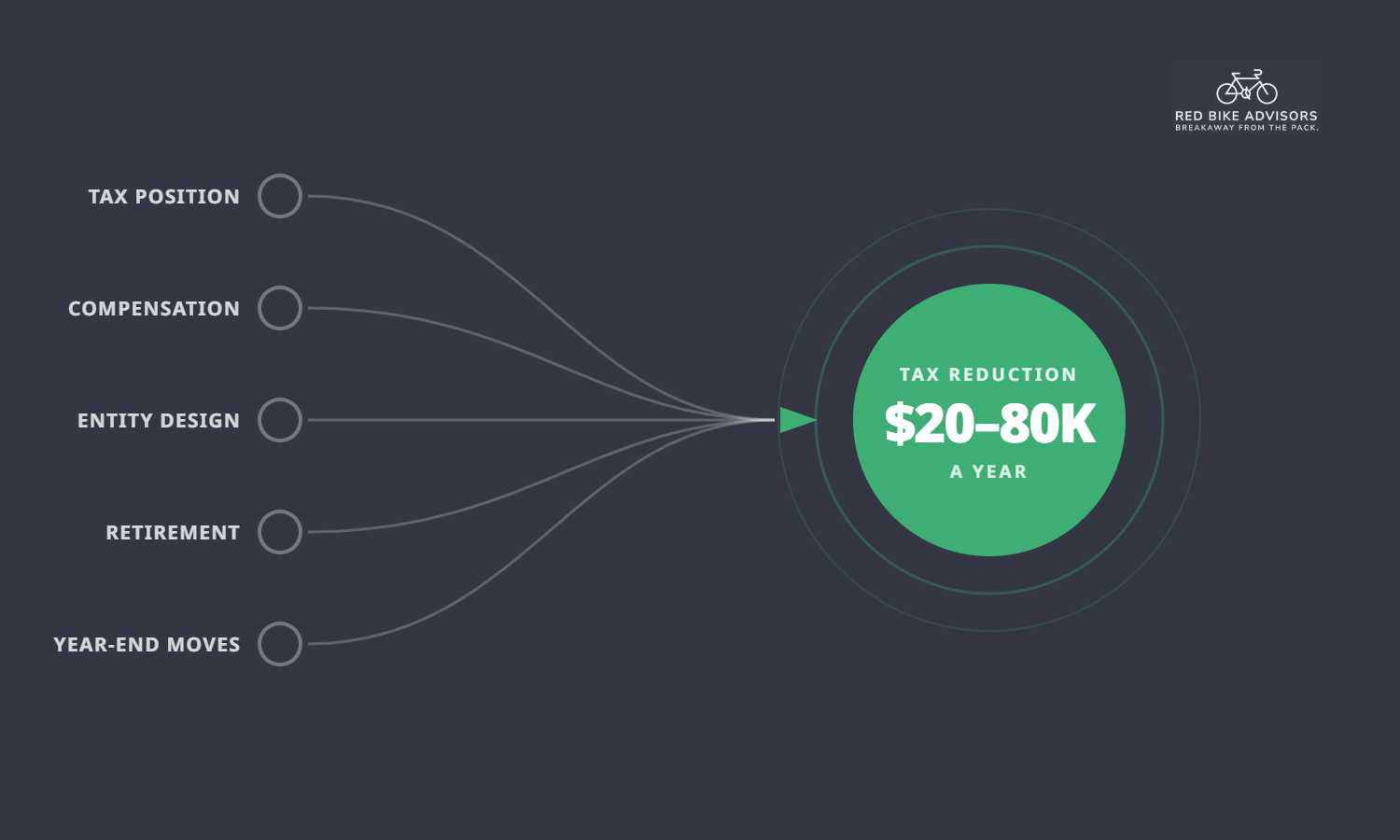
A Tax Savings Blueprint is a structured analysis of a dental practice's current tax position, compensation structure, entity design, retirement planning, and year-end opportunities, followed by a prioritized action plan for reducing the tax bill legally and sustainably. It is not a document. It is a working process. Most dental practice owners who have never had one done discover $20,000 to $80,000 in annual tax reduction opportunities in the first review. The exact number depends on practice revenue, current structure, and what has or has not been implemented before.
What does a Tax Savings Blueprint actually examine?
A comprehensive Tax Savings Blueprint for a dental practice reviews six areas:
- Entity structure: Is the practice structured to minimize payroll tax exposure? Is the S-Corp election in place if it makes sense? Has the structure been reviewed as revenue has grown?
- Owner compensation: Is the salary-versus-distribution split optimized? Is the salary defensible and documented? Is it being reviewed annually or set-and-forgotten?
- Retirement planning: Is a tax-advantaged retirement plan in place? Is the plan type appropriate for the owner's income level and age? Are contributions being maximized?
- Equipment and depreciation strategy: Are qualifying equipment purchases being timed strategically? Is Section 179 or bonus depreciation being used appropriately?
- Practice expenses and overhead: Are all legitimate business expenses being captured and deducted? Are there missed deduction categories?
- Year-end projections and estimated payments: Are quarterly estimated tax payments accurate? Are there known year-end moves that need to be executed before December 31?
What kind of savings do practices typically find in a Tax Savings Blueprint?
The specific opportunities vary by practice, but consistent patterns emerge:
Retirement plan gap: A solo dentist who has never set up a Solo 401(k) or defined benefit plan is missing one of the most accessible tax deductions available to a practice owner. A $66,000 annual Solo 401(k) contribution (2024 limit for those 50 and older, source: IRS) at a 32% federal tax rate generates $21,120 in federal tax savings per year. A defined benefit plan can allow contributions exceeding $100,000 annually in some cases, generating proportionally larger deductions. For practice owners with a spouse who can be employed in the practice, a combined spousal 401(k) contribution can significantly increase the annual deductible amount. This is one of the most commonly overlooked planning opportunities in dental practices.
Owner compensation restructuring: A dentist in an S-Corp paying $280,000 in salary when the defensible market rate is $180,000 is paying payroll taxes on $100,000 in excess wages. At 15.3% combined payroll tax rate, that excess costs $15,300 annually.
Equipment timing: A practice that purchases $100,000 in qualifying equipment in January versus December misses the full first-year Section 179 deduction for the prior year. Timing that purchase to December can accelerate $100,000 in deductions into the prior tax year, generating $32,000 to $37,000 in earlier tax savings depending on the rate.
Accountable expense plan: One of the most commonly missed deduction categories is a formal accountable expense plan, which allows the practice to reimburse the owner for home office, transportation, and business meal expenses in a way that preserves the deduction and avoids taxable income. Practices without a written plan in place are often leaving $2,000 to $4,000 in annual deductions on the table. In a recent blueprint review, adopting an accountable expense plan with $10,000 in properly documented expenses generated $2,400 in annual tax savings.
What does a Tax Savings Blueprint look like in practice?
In a recent Tax Savings Blueprint review, three opportunities were identified for a practice owner that had never been addressed:
- Compensation restructuring: salary reduced from a level well above market rate to a defensible amount, eliminating payroll taxes on the difference. Annual savings: $14,825.
- Retirement plan never maximized: a 401(k) established with a combined spousal contribution of $47,000. Annual savings: $11,280.
- Accountable expense plan never adopted: $10,000 in properly documented home office, transportation, and meal expenses now deductible. Annual savings: $2,400.
Total first-year savings identified: $74,493 against a $5,000 planning fee. Annual recurring savings going forward: $32,601 every year. First-year ROI: over 1,300%.
The filing had been accurate every year. The planning had never happened. Accurate and optimized are two different things.
When is the right time to do a Tax Savings Blueprint?
The right time is before October. That is the last meaningful window to act on most year-end tax planning opportunities before December 31 closes the options.
A blueprint done in October gives you 90 days to implement: establish the retirement plan, adjust the compensation structure, make the equipment decision. A blueprint done in February gives you information about a year that is already closed.
A free strategy session is the starting point for a Tax Savings Blueprint for your practice: https://redbikeadvisors.com/book-a-free-strategy-session/
Gretchen Roberts
Gretchen Roberts is CEO of Red Bike Advisors LLC. As a business owner herself, Gretchen has a deep understanding of the problems, questions, and financial pain points that business owners experience on a daily basis, and how strategic financial and tax planning is the key to "breakaway" business growth and success.