
What Is the Difference Between Proactive and Reactive Accounting for a Healthcare Practice?

By Gretchen Roberts
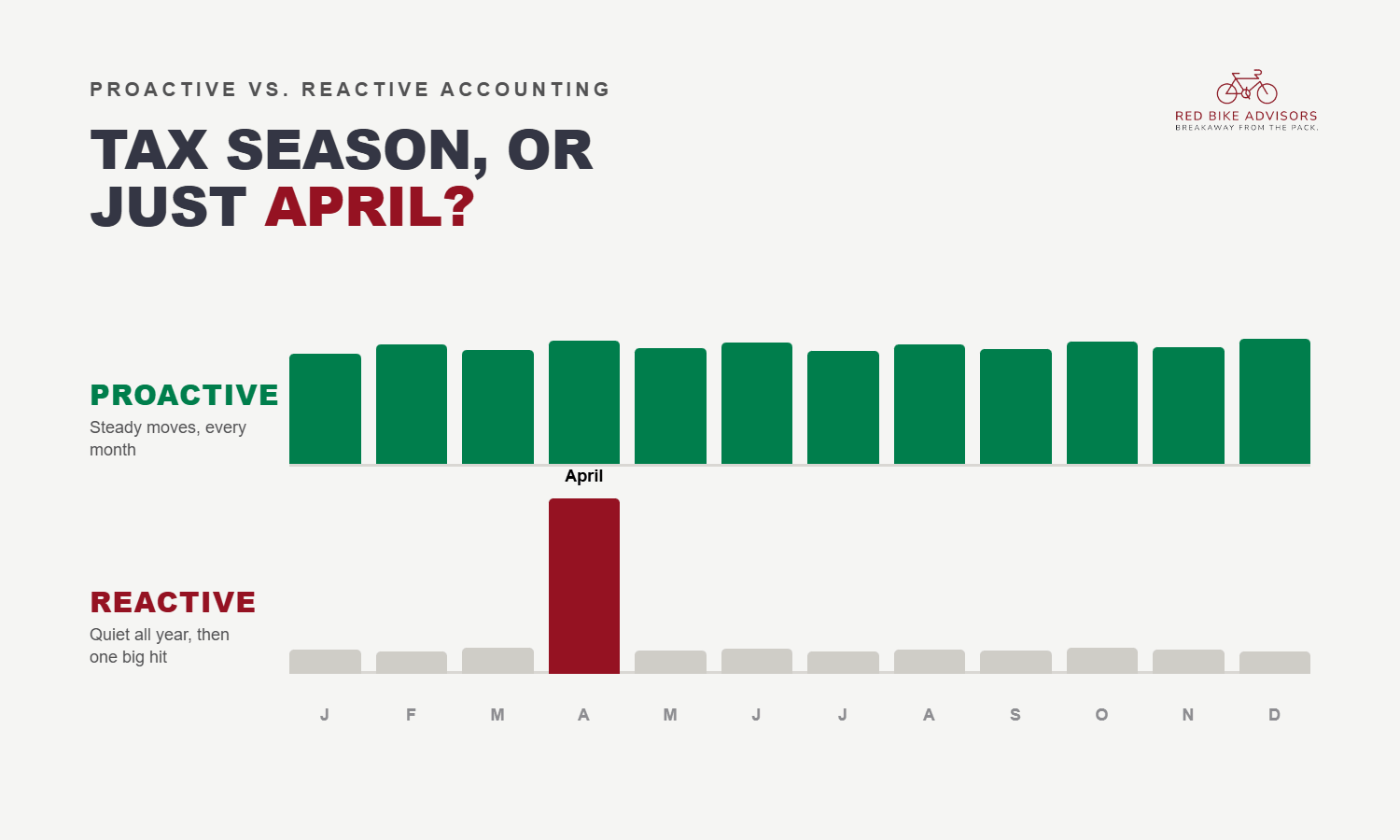
A reactive accounting firm files your taxes in April. A proactive accounting partner is in your corner every single month of the year, making decisions with you, not for you after the fact.
Here is what a proactive advisory relationship actually looks like, month by month.
January and February: Setting the Foundation
The year starts with a planning call, not a document request. A proactive firm reviews your prior year financials, identifies what changed, and sets up the financial agenda for the year ahead. Entity structure. Owner compensation strategy. Estimated tax payments.
Retirement plan contributions.
You know your tax liability because it was planned.
A reactive firm calls you in February asking for your receipts.
March and April: Tax Season Without the Drama
For a proactive practice owner, tax season is not a season. It is a formality. The returns reflect planning that happened throughout the year. The tax bill is not a surprise because quarterly projections have been running since January.
For a reactive practice owner, April is the most stressful month of the year. Documents scrambled. Numbers unfamiliar. A tax bill that feels like it came out of nowhere.
May and June: Mid-Year Check-In
A proactive firm runs a mid-year projection check-in in May or June. How is the practice performing against the prior year? Are there strategy adjustments that should happen before Q3?
July and August: Monitoring and Adjustments
You should be receiving a monthly financial report: a profit and loss statement, a balance sheet, and a short set of key performance indicators that tell you how the practice is running. If something is trending in the wrong direction, you have time to course correct before the year is out.
September and October: Year-End Planning Begins
Most tax-saving opportunities close on December 31. A proactive firm starts the year-end planning conversation in September or October. Equipment purchases. Retirement plan funding deadlines. Bonus timing. Owner compensation adjustments. Once the year ends, those decisions are locked.
November and December: Execution and Positioning
Any strategies identified in October are being implemented now. The practice is positioned for next year's planning cycle before December 31. And then January starts again, this time with the previous year's full picture already in hand.
I hear a version of this story often: a practice owner who has been with the same accounting firm for years, gets a tax bill every April that feels too big, and assumes that is just how it works.
It is not.
If you are curious about what this could look like for your practice, a free strategy session is the right place to start. Book one here https://redbikeadvisors.com/book-a-free-strategy-session
Gretchen Roberts
Gretchen Roberts is CEO of Red Bike Advisors LLC. As a business owner herself, Gretchen has a deep understanding of the problems, questions, and financial pain points that business owners experience on a daily basis, and how strategic financial and tax planning is the key to "breakaway" business growth and success.