
Why Is My Healthcare Practice Profitable but Has No Cash?

By Gretchen Roberts
Last updated on August 21, 2026
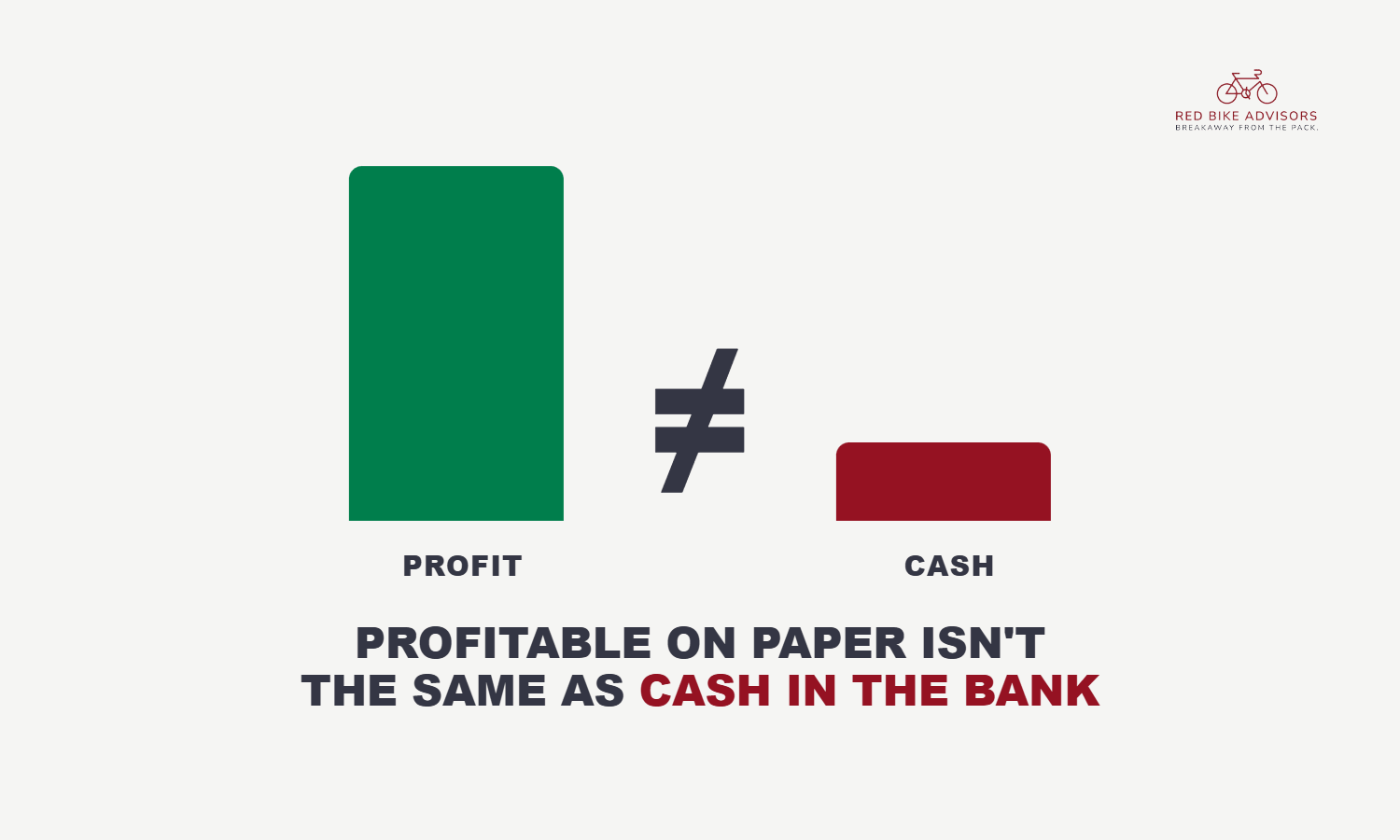
It's one of the most common and confusing situations practice owners face: the P&L shows a profit, the accountant says the year was solid, and yet the bank account feels permanently tight. This isn't a contradiction. It's a cash flow problem.
What Is the Difference Between Profit and Cash Flow?
Profit is an accounting concept. Cash is what pays your payroll. Your P&L measures whether revenue exceeded expenses. Your bank account measures how much cash is available right now. In healthcare practices, the gap is almost always explained by five things: accounts receivable timing, owner draws, working capital, tax payments, and debt service.
How Does Accounts Receivable Affect Cash Flow in a Practice?
When you deliver a service in January and collect payment in March, your P&L records revenue in January. Your bank account sees the cash in March. For medical practices, the benchmark for Days in A/R is 30 to 40 days. At $2 million in annual collections, a 55-day A/R cycle traps roughly $300,000 in the billing system at any given time. That cash is real. It's earned. It's just not available yet.
What Is Working Capital and Why Does a Practice Need It?
Working capital is the cash available to fund day-to-day operations. The benchmark for cash reserves in a healthcare practice is three to six months of operating expenses in a liquid account. Many practices I see for the first time are running with one month or less.
How Do Owner Draws Affect Cash Flow?
Many practice owners pay themselves inconsistently because they're trying to protect the practice. They take less during tight months, catch up when cash improves, and sometimes use personal funds to smooth over practice expenses. It can feel responsible in the moment, but it also blurs the line between how the practice is actually performing and how much the owner is personally absorbing.
A profitable practice should support sustainable, structured owner compensation, salary, distributions, tax reserves, and reinvestment, not rely on the owner absorbing every financial shock. When that structure is in place, even a slower month feels manageable instead of alarming.
How Do Tax Payments Affect Cash Flow?
Profit doesn't automatically mean the cash to pay the tax bill is sitting in the account. A practice can generate taxable income while the owner has already used available cash for payroll, equipment, or distributions. When quarterly estimates or year-end taxes come due, there's nothing waiting in reserve, and that's the painful feeling of being taxed for something you can't find.
Tax planning shouldn't happen once a year. A forward-looking approach estimates tax exposure throughout the year and reserves cash before the obligation becomes urgent, which matters especially for practices with seasonal swings, rapid growth, or major purchases.
How Does Debt Affect Cash Flow?
Many practices carry debt for equipment, build-outs, or working capital, and that's not automatically a problem. It can help a practice grow or modernize. The issue is that loan principal payments reduce cash without ever appearing as an expense on the P&L.
For example, a practice might show $20,000 in monthly profit but also owe $12,000 in loan principal that same month. Add owner draws, quarterly tax payments, and a slower collections month, and that profit disappears fast. A debt schedule makes this visible ahead of time, what's due, when it's due, and how it affects cash, so you can plan for it instead of reacting to it.
What Is the "Lost in Translation" Problem?
The accountant hands over a P&L showing strong net income. The owner looks at the bank account and something doesn't add up. A monthly financial package should include three things: the P&L, the balance sheet, and a cash flow summary. Together, they tell the full story. The P&L alone tells only part of it.
If you're ready to go from financially stressed to financially retired, a free strategy session is the right place to start that conversation.
Gretchen Roberts
Gretchen Roberts is CEO of Red Bike Advisors LLC. As a business owner herself, Gretchen has a deep understanding of the problems, questions, and financial pain points that business owners experience on a daily basis, and how strategic financial and tax planning is the key to "breakaway" business growth and success.