
What Should Be in a Healthcare Practice Monthly Financial Report?

By Gretchen Roberts
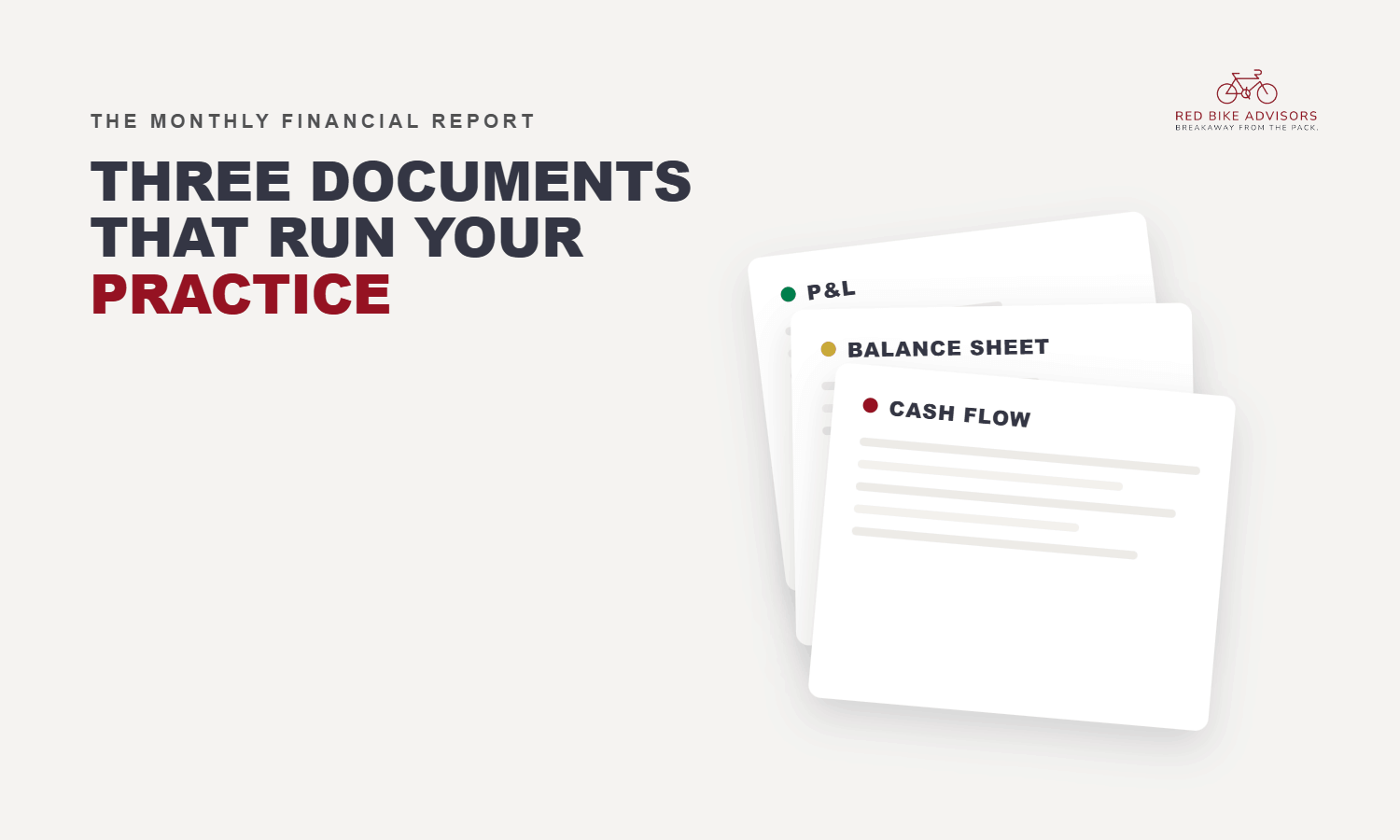
A useful monthly financial report contains three core documents and a short set of KPIs.
Together, they take about fifteen minutes to review and tell you whether your practice is healthy or whether something needs attention.
What Are The Three Documents Every Practice Owner Should Review Monthly?
1. The Profit and Loss Statement (P&L). Revenue versus expenses, year-to-date. Read it for trend, not just totals. Do not read it in isolation.
2. The Balance Sheet. What the practice owns and owes at a point in time. Catch practices that are profitable but accumulating debt.
3. The Cash Flow Summary. The most underused document in healthcare practice finance. Explains why the bank balance looks different from what the P&L suggests. This is the document that solves the "profitable on paper, tight on cash" problem.
What KPIs Should Be in the Monthly Report?
Collections rate or net collection rate. Revenue per visit or per provider. Staff cost as a percentage of revenue. Overhead as a percentage of revenue. Days in A/R. Cash runway in months of operating expenses. Net profit margin year-to-date. That is eight numbers. If you know all eight, you have real financial clarity
What Should You Do When You Review This Report?
Look for three signals: trending wrong (two or more consecutive months moving the wrong direction), off benchmark (compared to specialty data), or changed unexpectedly. A fifteen-minute monthly review of this report is the most efficient financial management habit a practice owner can build. I always like to say that you can outsource your back office (accounting, tax, wealth management) but you can’t outsource the oversight of your financials. As the practice owner, it’s a language you need to learn.
If you want to see what a real monthly financial report looks like for your practice, a free strategy session is the right place to start. Book one at https://redbikeadvisors.com/booka-free-strategy-session
Gretchen Roberts
Gretchen Roberts is CEO of Red Bike Advisors LLC. As a business owner herself, Gretchen has a deep understanding of the problems, questions, and financial pain points that business owners experience on a daily basis, and how strategic financial and tax planning is the key to "breakaway" business growth and success.