
You Don't Have to Outsource All of It (Or None of It)

By Gretchen Roberts
How to Think About Bookkeeping, Payroll, Accounts Payable, and AR Separately
"Should I hire someone in-house or outsource the back office?"
I get some version of this question in almost every strategy session with a growing business owner.
And the answer I give almost always surprises them.
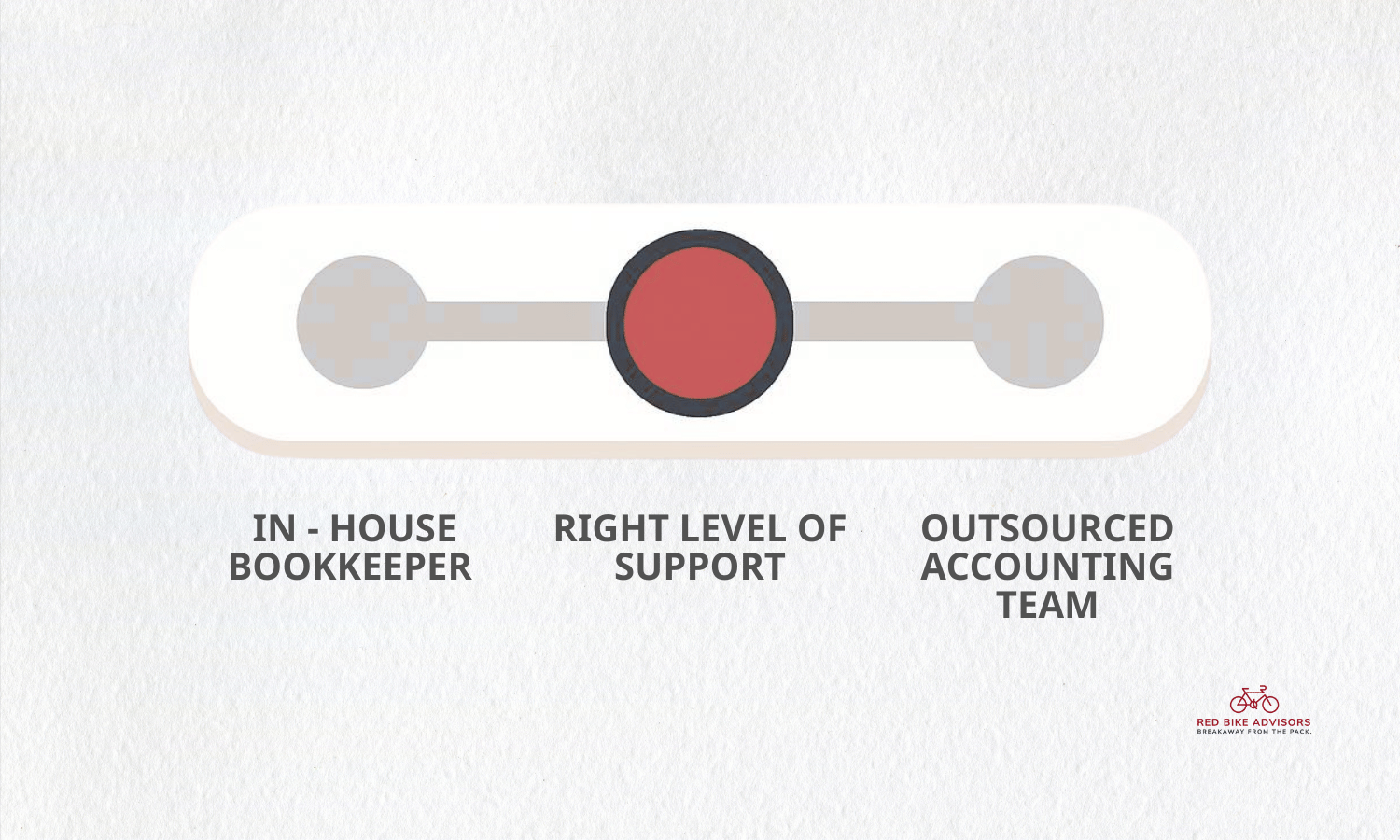
It's not in-house or outsourced. It's which functions, and when.
The back office isn't one decision. It's four. And each one has a different right answer depending on where your business is right now.
The Four Functions Owners Bundle Together (And Shouldn't)
When most owners say "the books," they're actually talking about four distinct functions:
- Bookkeeping: Categorizing transactions, reconciling accounts, month-end close
- Payroll: Processing wages, tax withholding, filings, compliance
- Accounts Payable (Bill Pay): Managing vendor invoices, approving payments, cash flow timing
- Accounts Receivable: Invoicing clients, tracking collections, following up on outstanding balances
These are not the same job. They don't require the same skills. They don't carry the same risk if something goes wrong. And they don't all belong inside or outside your business for the same reasons.
Treating them as one decision is where most owners go wrong.
What Belongs Outside: Bookkeeping and Payroll and Sometimes Bill Pay
Bookkeeping and payroll are the two functions I most consistently recommend outsourcing, and here's why.
Bookkeeping requires expertise, not presence.
Clean books require someone who understands accounting principles, knows how to reconcile properly, catches errors before they compound, and produces financials you can actually make decisions from. That's a skill set, not a role that benefits from sitting in your building.
When you hire an in-house bookkeeper, you get one person with one skill set. When that person leaves, you start over. When they miss something, there's often no one else to catch it. An outsourced accounting team brings multiple layers of review, broader expertise, and continuity you can't build with a single hire.
Payroll carries serious compliance risk.
Payroll isn't just cutting checks. It's tax withholding, quarterly filings, W-2s, compliance with ever-changing federal and state rules. The penalties for getting it wrong are real, and they show up fast.
This is exactly the kind of function that belongs with specialists who do it every day across dozens of clients and stay current on the rules so you don't have to.
What Often Belongs Inside: Accounts Receivable and Accounts Payable
Here's where I push back on the "outsource everything" model.
Accounts receivable is a relationship function.
Following up on outstanding invoices isn't just administrative work. It touches your client relationships directly. A follow-up call or email about an unpaid balance reflects on your business, your tone, and your judgment about when to push and when to give grace.
That's not something you want handled by someone who doesn't know your clients. Keeping AR internal, or at minimum tightly managed by someone inside your business, protects those relationships and keeps cash flow visibility where it belongs: with you.
Accounts payable is about control, not just processing.
Bill pay requires someone with real authority to approve payments, manage cash flow timing, and make judgment calls about which vendor gets paid first when cash is tight. That decision-making has to stay close to ownership.
Even when you outsource, someone on your internal team has to approve payments and ensure there’s cash in the account to cover them.
What This Looks Like in Practice
I was working with a service business owner last quarter who had grown quickly and was trying to figure out his back office. He had been doing most of it himself and was ready to hand it off.
His assumption was that he needed to make one call: hire someone or outsource everything.
We mapped it out differently.
Bookkeeping and payroll went to us. Clean, expert hands, multiple layers of review, compliance handled.
AR stayed with his operations manager, who already knew the clients and had the judgment to manage collections without damaging relationships.
AP stayed with him, with a simple approval process so nothing went out the door without his sign-off.
The result: his books got significantly cleaner within 60 days, payroll compliance was off his plate entirely, and he kept the visibility and control over cash flow that he needed to run the business well.
He didn't outsource everything. He outsourced the right things.
The Question Worth Asking First
Before you make any back-office hire or outsourcing decision, I'd encourage you to ask this for each function separately:
- Does this require specialized expertise or can a competent generalist handle it?
- Does doing this well require someone embedded in daily operations and client relationships?
- What's the risk if this function is mishandled?
- Does this require ongoing judgment calls that should stay close to ownership?
Your answers will point you toward the right structure for each function. And the right structure is rarely the same for all four.
The back office isn't one decision. Build it like it isn't.
If you want to map out which functions make sense to outsource and which to keep internal based on where your business is right now, book a free strategy session. We'll walk through the full picture together.
Gretchen Roberts
Gretchen Roberts is CEO of Red Bike Advisors LLC. As a business owner herself, Gretchen has a deep understanding of the problems, questions, and financial pain points that business owners experience on a daily basis, and how strategic financial and tax planning is the key to "breakaway" business growth and success.